

Who Knows What? The Power of Information in Storytelling
How to build suspense, deliver surprises, and keep readers hooked!

When you’re writing a story, one of the most powerful tools at your disposal is information—who has it, who doesn’t, and when they get it. Every character, and even your audience, has a stake in the knowledge you reveal or withhold. This dynamic can create tension, heighten emotions, and shape the way your story unfolds.
Not everyone in a story needs to know everything, and that’s where the fun begins. Letting the audience in on a secret that a character isn’t aware of—or keeping them in the dark while a character knows more—opens the door to suspense, mystery, and surprise. It’s all about timing and perspective.
Suspense: Keeping Readers on the Edge
Suspense thrives on uncertainty and urgency. It’s that heart-pounding feeling when the protagonist is one step away from disaster, and you can’t look away. To create suspense, you need three things:
A clear goal or outcome that’s at stake.
A sense of urgency—time is running out, or danger is closing in.
A vivid idea of what success or failure looks like.
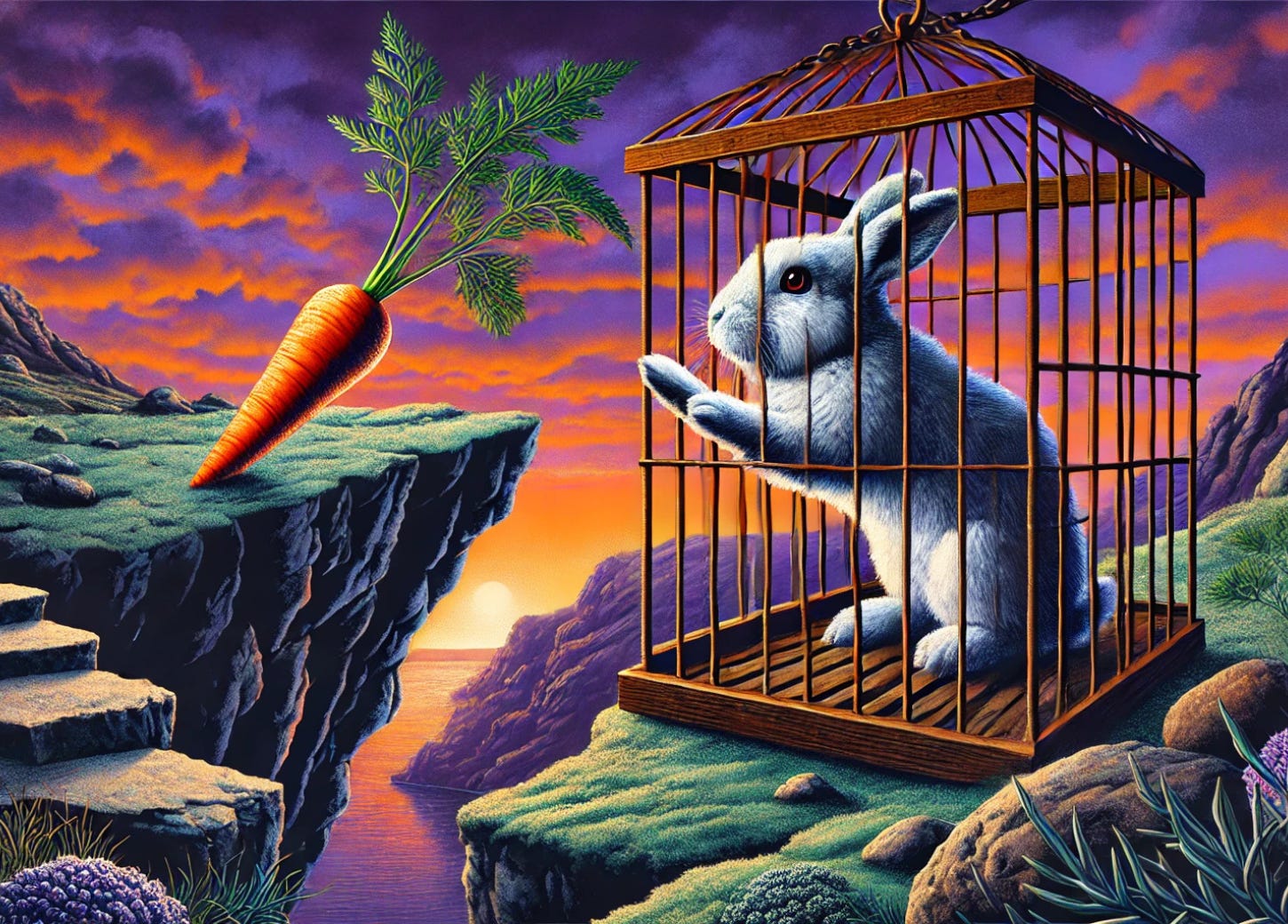
Imagine a rabbit trapped in a cage, desperately reaching for a carrot just beyond its grasp. While we might wonder if the rabbit will get the carrot—or even hope for a particular outcome—this setup lacks the urgency needed to create true suspense. Now, let’s raise the stakes. Picture the carrot teetering on the edge of a cliff, swaying with every gust of wind, threatening to fall out of reach forever. Suddenly, the situation feels immediate and precarious. Every stretch of the rabbit’s paw becomes fraught with tension as the carrot edges closer to tumbling away.
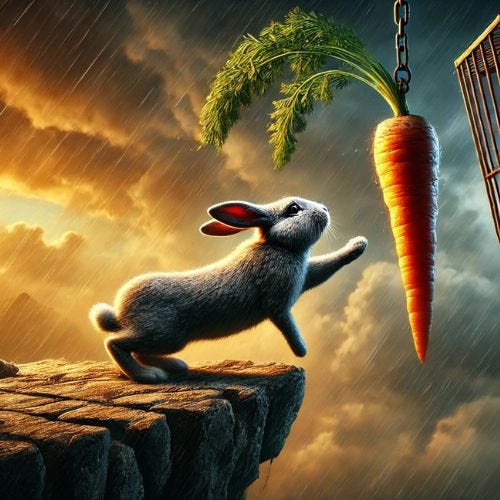
We can amplify the suspense further by showing the rabbit is starving, giving weight to the carrot’s value and increasing the stakes. Suspense thrives on this interplay of uncertainty and urgency. By reducing the time left before the outcome is determined—whether through a ticking clock or an imminent event—we heighten the tension. The closer we move to a critical "trigger threshold," where an undesired outcome feels inevitable, the more gripping the narrative becomes.
Surprise: The Art of the Unexpected
Surprises happen when you flip expectations on their head. They work best when they feel logical in hindsight—moments that make readers think, “Of course! Why didn’t I see that coming?” For instance, if a bomb suddenly explodes during an ordinary conversation, that’s a surprise. But if we’ve seen the timer counting down, the explosion becomes part of the suspense.
Surprises can also occur within suspenseful moments. A twist in the expected outcome—like a bomb not going off when the timer hits zero—adds a new layer of intrigue. Just remember, surprises should enhance your story, not exist for shock value alone.
Promises: Setting Up Expectations
When you introduce something in your story—a cryptic line of dialogue, a mysterious object, or a looming threat—you’re making a promise to the audience that it will matter. These promises create anticipation, which pays off when the setup leads to a meaningful reveal or resolution.
Think of a promise as a thread you weave through your story, keeping readers engaged as they wait to see how it all ties together. Whether it’s a shadow in the alley or a foreboding warning, these details help build the layers of your narrative.
Information is a powerful tool in storytelling. By carefully deciding who knows what and when, you can create suspense, deliver surprises, and build a story that keeps readers guessing. Whether you’re writing a thriller, a romance, or a fantasy, mastering this balance will make your story unforgettable.